
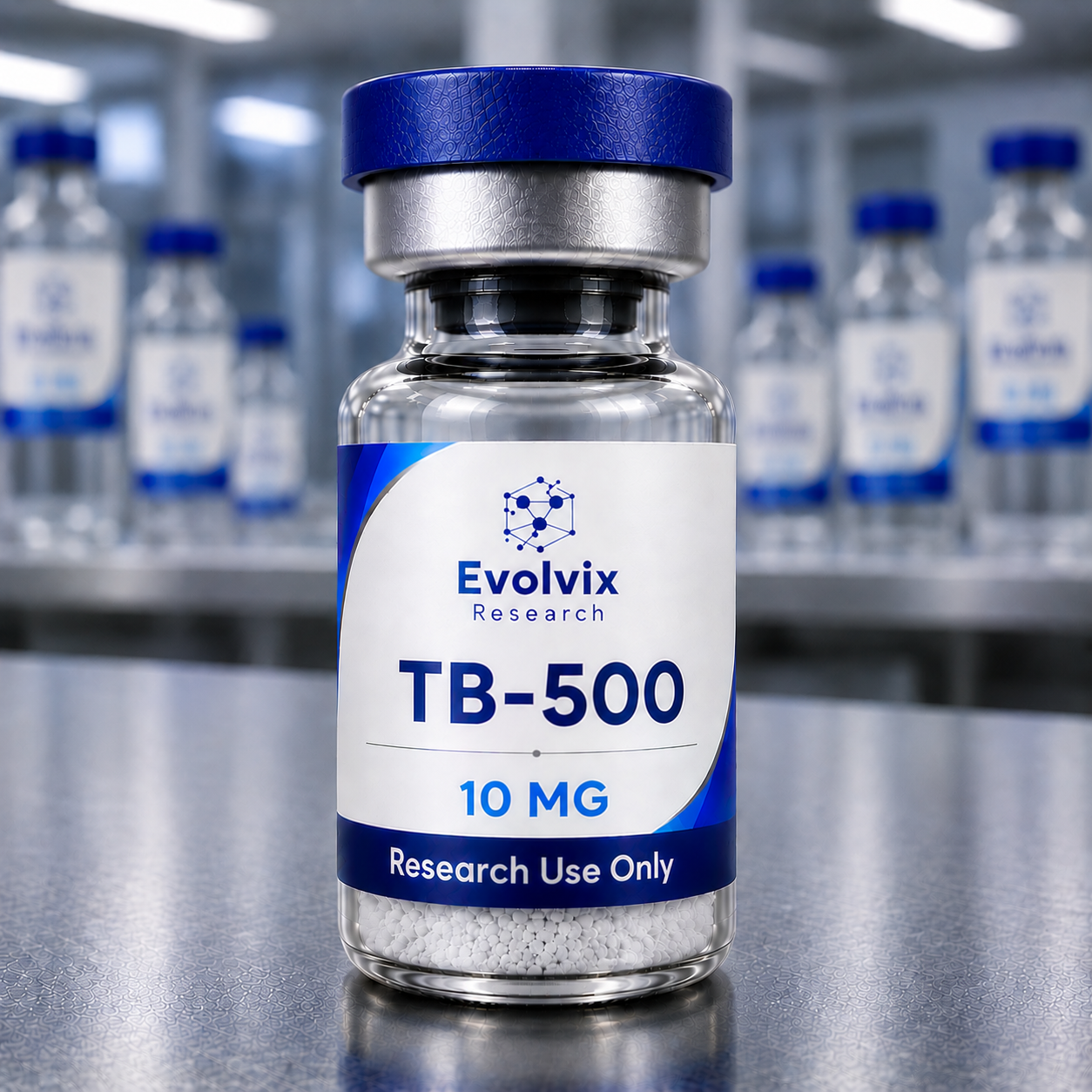

TB-500
TB-500 is a decapeptide derived from the amino acid sequence of bovine tendon collagen. Originally identified for its potential utility in tissue regeneration studies, it has been extensively researched in the academic and scientific communities as a tool for evaluating cellular responses. This product is intended solely for research purposes in controlled academic environments.
Research Context
TB-500 was first characterized in 2002 by a team of researchers who demonstrated its ability to induce cellular proliferation and enhance collagen production in vitro. The peptide sequence (Ac-(Gly-Pro-Pro-Gly-Ser-Pro-Gly-Ala-Pro-Gly)-NH2) is notable for its structural similarity to native collagen tripeptides, which has allowed it to be studied in various biological contexts. Over the years, it has emerged as a valuable experimental reagent in fields such as regenerative medicine, cell biology, and protein engineering research.
Research Overview
TB-500 has been primarily utilized as a probe to investigate the signaling pathways involved in extracellular matrix synthesis and tissue repair. Its effects on fibroblast activity, cellular differentiation, and wound healing responses have been a central focus of preclinical studies. While its precise mechanisms remain under investigation, the peptide has shown promise in enhancing cellular responses to extracellular stimuli, including growth factor signaling and matrix remodeling processes.
Key Research Focus Areas
- Cellular Proliferation and Differentiation: TB-500 has been studied for its capacity to modulate fibroblast proliferation and collagen gene expression, particularly in the context of tendon and ligament repair.
- Extracellular Matrix Biogenesis: Research has explored its role in enhancing collagen synthesis and fibril formation, relevant to tissue engineering applications.
- Wound Healing Models: Preclinical studies have utilized TB-500 to investigate its potential in accelerating cutaneous and full-thickness wound repair in animal models.
- Signal Transduction Pathways: Mechanistic investigations have focused on identifying downstream signaling cascades activated by TB-500, including MAPK and PI3K/Akt pathways, which influence cellular responses to extracellular cues.
Safety and Compliance
As with all research reagents, TB-500 must be handled with the appropriate precautions to ensure safety in the laboratory setting. While peer-reviewed studies report no significant acute toxicity at typical research concentrations, potential long-term effects in non-controlled environments have not been fully characterized. This product is intended exclusively for academic and institutional research use in compliance with applicable regulations governing peptide synthesis and experimental reagents. Proper documentation of use and disposal procedures is strongly recommended.
For research use only. Not for human or animal consumption.
| Size | 10MG, 20MG |
|---|

Reviews
There are no reviews yet.